

Where DevOps and Agile Stand in 2026
Once buzzwords, now baked into the DNA of modern software teams DevOps and Agile have come a long way. But if you ask five engineers what each one means in 2026, chances are you get five different answers. So let’s cut through the noise.
Agile today still focuses on iteration and adaptability. It’s built on fast cycles, tight feedback loops, and close collaboration between teams. But it’s matured. Agile in 2026 is less about sticking to Scrum rituals and more about keeping lean, informed decision making alive across the project lifecycle.
DevOps, on the other hand, is no longer just a set of automation tools or deployment pipelines. It’s a philosophy that merges software engineering with IT operations one unified delivery muscle. Modern DevOps spans continuous integration, testing, deployment, observability, and even rollback strategies. It thrives on reducing friction between writing code and getting it into user hands safely.
Over the last ten years, these two have blended more than they’ve diverged. Agile teams often fold DevOps into their process to move faster; DevOps minded developers adopt Agile values to stay flexible. And yet, the debate still matters.
Why? Because not every team works the same way. A lightweight mobile startup might get bogged down copying DevOps playbooks meant for Fortune 500 engineering. Meanwhile, a global SaaS company will outgrow Agile standups if they don’t scale ops in parallel.
In short knowing the roots and realities of each approach isn’t just tech trivia. It’s how smart teams choose the right tools, stay responsive, and ship better software without burning out.
Core Differences That Still Define Them
Agile and DevOps take very different routes to the same goal: fast, reliable software delivery. Agile is about iteration. Small chunks of work. Quick standups. Constant feedback. It works best when you don’t have all the answers upfront. Teams adapt on the fly ideal for building MVPs or handling changing customer requirements.
DevOps is bigger picture. It looks at the entire pipeline from code commit to live deployment. The goal isn’t just to build the app fast, but to keep it running smoothly. Testing, automation, infrastructure DevOps has its hands on all of it. Think fewer handoffs, more stability.
Agile teams tend to be smaller and cross functional. Designers, developers, and product folks work closely in time boxed sprints. In contrast, DevOps often blends development and operations into one continuous flow. It scales well for enterprise level systems where uptime, security, and delivery velocity matter more than iteration speed.
If you’re in startup mode, Agile helps you move before locking everything down. If you’re enterprise scale or managing complex deployments across multiple services DevOps is your home field. Each has strengths. The choice depends on the weight and shape of the problem you’re solving.
When to Choose Agile
Agile still shines when the target keeps moving. If you’re working on an MVP, entering a new market, or navigating high uncertainty requirements, Agile fits like a glove. It’s built for change, not for perfect.
Projects that demand constant input from stakeholders or require iteration mid sprint benefit most. The feedback loop is tight. A new user insight goes in on Tuesday; it’s tested by Friday. That kind of speed matters when you’re racing to find product market fit or respond to evolving priorities.
Agile also works best when business and dev teams sit on the same side of the table. Daily check ins, shared backlogs, and open communication aren’t optional they’re the engine. You don’t have to wait two weeks just to hear, ‘That wasn’t quite what we meant.’
And because Agile doesn’t need heavyweight infrastructure or overly complex tooling, it’s ideal for lean teams who want to move fast with just enough process. When the goal is clarity and iteration not stability at all costs Agile wins.
When DevOps Makes More Sense
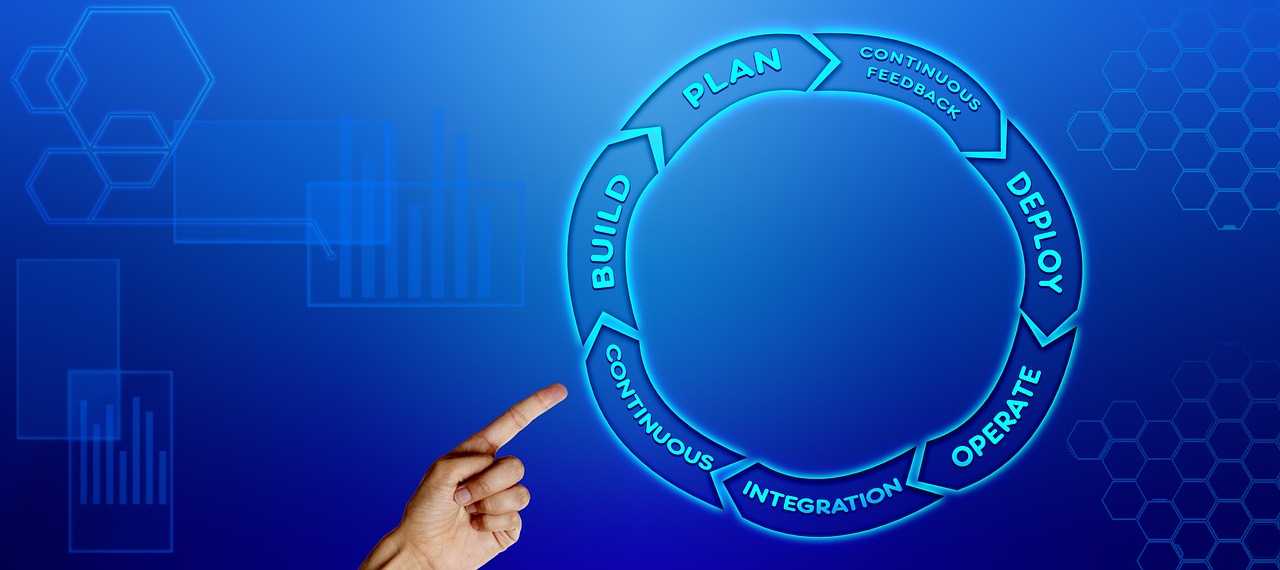
If you’re running complex systems think multiple services, lots of dependencies, critical uptime DevOps isn’t just helpful, it’s table stakes. Continuous delivery isn’t a luxury at this scale; it’s how you stay alive. Automated testing ensures that shipping faster doesn’t mean breaking things. Infrastructure as code brings repeatability and control that manual ops just can’t match.
This is the territory where DevOps really shines. It thrives in environments where releases happen often, changes need to be low risk, and internal teams must coordinate across silos. It’s how you move code from a laptop to production without losing sleep.
Security, reliability, and deployment velocity aren’t negotiable here. If any one of those breaks, it doesn’t matter how Agile your standups are the product stalls. That’s why mid to large scale systems lean hard into DevOps. It’s not just about faster delivery. It’s about safer delivery at scale.
Hybrid Environments: The New Default
In 2026, most development teams have stopped trying to choose between Agile and DevOps. Instead, they’re picking the parts that work and blending them. Agile brings adaptability. DevOps delivers speed and scale. Used together, they offer the kind of flexibility modern products demand.
Here’s how that looks in practice: sprints for product iterations, daily standups, and backlog grooming from Agile. But when it’s time to ship? That’s where DevOps kicks in CI/CD pipelines, infrastructure as code, automated testing, the whole nine yards. It’s about staying reactive without sacrificing rigor.
Teams are doing more than just duct taping methodologies together. They’re getting intentional. Front end teams might run tight two week Agile cycles, while the platform team leans hard on DevOps to support continuous delivery. The key is alignment not adopting dogma.
Modern tooling makes this hybrid model possible. Platforms that integrate with both sprint boards and delivery pipelines are everywhere. Add in AI backed capabilities like predictive alerts, accelerated test cycles, or code suggestions and teams can go faster while reducing risk. The blend isn’t just convenient; it’s a competitive edge.
Take a closer look at how AI is accelerating development workflows in this related piece: AI in development.
AI’s Influence on Both Methodologies
AI isn’t just a buzzword anymore it’s a utility. In 2026, it’s streamlining DevOps and Agile workflows from the ground up. No more late night backlog grooming or wrestling with post release bugs for hours. AI scrubs through data at scale, flags issues early, and even writes draft test cases before a human spots the problem.
Planning? Generative AI helps teams map user stories or sprint plans based on production metrics. Testing? Smart bots run simulations, prioritize bugs by impact, and track regression risks automatically. Post launch? Predictive models crunch usage data in real time to flag performance or infrastructure bottlenecks before end users even notice.
The line between Agile and DevOps is getting thinner because AI doesn’t care what label your team uses. It runs across both, tearing down handoff walls and speeding everything from ideation to iteration. Dev teams adopting AI deeply aren’t choosing Agile or DevOps; they’re building a workflow that’s faster, smarter, and more adaptive than either could offer alone.
For more on the tools building these workflows, check out AI in development.
Making the Right Call for Your Team
Choosing between Agile, DevOps, or a blended approach in 2026 isn’t about loyalty it’s about fit. Start by looking at the practical stuff: How big is your team? What type of product are you building? Are you aiming for rapid iteration or dependable delivery at scale? Smaller teams shipping MVPs may benefit from Agile’s flexibility. Larger teams handling complex, distributed systems likely need DevOps’ automation and visibility.
Also, weigh your tech stack. Some tools naturally align better with pipelines and CI/CD workflows. Others favor flexibility and speed over control. It’s not about right or wrong just what works for how you build and ship.
Resist the urge to chase trendy acronyms or jam dynamic teams into rigid models. Adapt frameworks to your context. If two week sprints work but your deployment process is DevOps heavy, cool. Don’t break what works.
In the end, the best methodology is the one that moves with you. If the way you build software keeps evolving, so should the way you manage, test, and deliver it. That’s not indecision it’s maturity.

 Ask Sharone Phillipssond how they got into emerging technology overview and you'll probably get a longer answer than you expected. The short version: Sharone started doing it, got genuinely hooked, and at some point realized they had accumulated enough hard-won knowledge that it would be a waste not to share it. So they started writing.
What makes Sharone worth reading is that they skips the obvious stuff. Nobody needs another surface-level take on Emerging Technology Overview, Gadget Reviews, Software Development Insights. What readers actually want is the nuance — the part that only becomes clear after you've made a few mistakes and figured out why. That's the territory Sharone operates in. The writing is direct, occasionally blunt, and always built around what's actually true rather than what sounds good in an article. They has little patience for filler, which means they's pieces tend to be denser with real information than the average post on the same subject.
Sharone doesn't write to impress anyone. They writes because they has things to say that they genuinely thinks people should hear. That motivation — basic as it sounds — produces something noticeably different from content written for clicks or word count. Readers pick up on it. The comments on Sharone's work tend to reflect that.
Ask Sharone Phillipssond how they got into emerging technology overview and you'll probably get a longer answer than you expected. The short version: Sharone started doing it, got genuinely hooked, and at some point realized they had accumulated enough hard-won knowledge that it would be a waste not to share it. So they started writing.
What makes Sharone worth reading is that they skips the obvious stuff. Nobody needs another surface-level take on Emerging Technology Overview, Gadget Reviews, Software Development Insights. What readers actually want is the nuance — the part that only becomes clear after you've made a few mistakes and figured out why. That's the territory Sharone operates in. The writing is direct, occasionally blunt, and always built around what's actually true rather than what sounds good in an article. They has little patience for filler, which means they's pieces tend to be denser with real information than the average post on the same subject.
Sharone doesn't write to impress anyone. They writes because they has things to say that they genuinely thinks people should hear. That motivation — basic as it sounds — produces something noticeably different from content written for clicks or word count. Readers pick up on it. The comments on Sharone's work tend to reflect that.