

Where We Are With AI in 2024
AI isn’t futuristic buzz anymore it’s a core part of how things get done across industries. From backend systems to front facing services, automation powered by AI is tightening feedback loops and cutting down on human drag. We’re seeing AI step into roles that used to rely on judgment: making decisions faster, with more data and fewer errors.
Key advancements are fueling the shift. Deep learning models aren’t just recognizing faces or sorting spam they’re interpreting complex medical scans, predicting supply chain disruptions, and flagging financial anomalies. Natural Language Processing (NLP) has gone from clunky chatbots to full scale virtual agents with near human fluency. In robotics, real time adaptability and precision are letting machines perform surgical procedures or handle fragile logistics tasks.
In healthcare, AI helps triage patients, recommend treatments, and even predict outbreaks before they spread. In finance, it runs algorithmic trading, detects fraud faster than any analyst, and reduces compliance headaches. Logistics is being reshaped by AI that reroutes shipments in real time or forecasts warehouse staffing needs weeks in advance.
AI in 2024 isn’t flashy it’s functional. And it’s quietly overhauling the decision making anatomy of entire fields.
Quantum Leap: What’s Changing
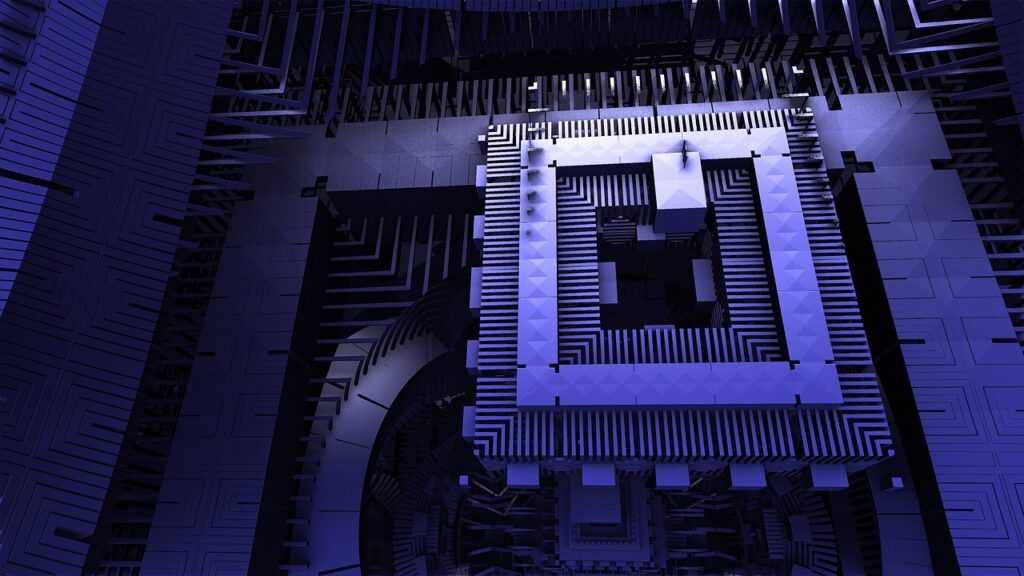
Quantum computing isn’t just a buzzword anymore it’s an arms race. At the center are qubits, the fundamental units of quantum computation. Unlike classical bits, which are either 0 or 1, qubits can exist in multiple states at once thanks to superposition. When combined with entanglement, this allows quantum computers to process complex calculations at speeds conventional machines can’t touch.
Recent breakthroughs are turning theory into practice. Companies have begun demonstrating error corrected quantum circuits, a necessary step toward scalable computing. IBM hit a milestone with its 100+ qubit Eagle processor, while Google’s Sycamore continues pushing boundaries in quantum speed. And China’s quantum labs? Not standing still either.
We’re still not talking mass adoption most experts aim for practical, commercial grade systems by the early 2030s. But 2024 is the year pieces start locking into place. Partnerships, hybrid systems, quantum as a service models they’re all ramping up.
The major players? IBM, Google, Microsoft, and Amazon are heavily invested, each with different tech stacks and roadmaps. Don’t count out startups like Rigetti or PsiQuantum many are quietly building tomorrow’s breakthroughs in the background.
To get a sense of where this is all headed, check out the latest Quantum computing outlook.
The Collision Course: AI + Quantum

The convergence of AI and quantum computing isn’t just a theoretical concept it’s a fast approaching reality. Together, these two technologies could unlock exponential advances in computing, transforming how industries analyze data, generate predictions, and solve previously intractable problems.
Supercharging AI Models
Quantum computing has the potential to take AI to the next level by accelerating computation and enhancing model performance:
Faster Training: Quantum systems could drastically reduce the time it takes to train complex AI models.
Larger Data Sets: Quantum capabilities may allow models to process and learn from much larger and more complex data sets.
Smarter Algorithms: Quantum inspired algorithms could make AI more efficient at pattern recognition, optimization, and reasoning.
Transforming Data Analysis and Predictions
With boosted computing power, AI can step into new territory for data analysis:
Hyper Personalized Insights: Quantum enhanced AI could enable real time personalization across sectors like retail, entertainment, and healthcare.
Improved Predictive Accuracy: With more variables analyzed at once, predictive models will become more accurate and nuanced.
Real Time Decision Making: Industries like finance and transport could benefit from instant, high stakes decisions driven by AI quantum systems.
A New Era for Complex Industries
Quantum AI could break current computational bottlenecks in several critical sectors:
Cybersecurity: Quantum algorithms may not only break traditional encryption but also help AI detect threats faster and develop more secure systems.
Energy: From optimizing grid performance to accelerating fusion research, quantum enhanced AI will reshape how we produce and consume energy.
Pharmaceuticals: Simulating molecular behavior and predicting compound effectiveness will become dramatically faster and more reliable.
The bottom line: quantum computing won’t replace AI it will amplify it. And together, they have the potential to redefine what’s possible in science, business, and society.
Industry Shakeups to Expect
Finance: Risk Modeling in Microseconds
Quantum computing has the potential to revolutionize financial forecasting and risk assessment. By rapidly solving complex equations that would take classical computers hours or days, quantum enhanced AI models could:
Perform real time risk modeling across dynamic markets
Simulate thousands of market scenarios simultaneously
Help institutions identify systemic vulnerabilities before they escalate
Pharmaceuticals: Accelerated Drug Discovery
AI already plays a role in drug development, but when combined with quantum simulations, the pace and precision of discovery could skyrocket. Quantum powered models can:
Simulate molecular interactions with near perfect accuracy
Test thousands of chemical combinations within minutes
Reduce the time from research to clinical trial dramatically
This means potential breakthroughs in treating rare or previously untreatable diseases.
Supply Chains: Optimization at Global Scale
Global logistics networks grow more complex by the day. Applying both AI and quantum computing allows systems to optimize routes, inventory, and demand prediction more effectively. Benefits include:
Real time adjustment to shipping routes and delivery schedules
Reduced transportation and storage costs
More resilient networks under unpredictable conditions
National Security & Cryptography: Preparing for the Quantum Threat
As quantum computing advances, so does its ability to decode traditional encryption methods. This presents a fundamental challenge to data security.
Current encryption standards (like RSA) could be broken by advanced quantum algorithms
Governments are now investing in post quantum cryptography to stay ahead
AI is being applied to monitor and adapt security systems in real time as new threats emerge
Organizations handling sensitive data will need to rethink cybersecurity strategies from the ground up in a post quantum world.
Warnings and What to Watch
As AI begins to intersect with quantum computing, there are red flags we can’t afford to ignore.
First, ethics. With more power comes more responsibility literally. Quantum AI could make decisions so fast and complex that even their creators don’t fully understand them. That’s a problem for transparency and fairness. Who takes the fall when a model goes rogue? How do we audit outcomes when the math becomes incomprehensible to most humans? These aren’t hypotheticals anymore they’re urgent questions for companies deploying advanced systems.
Then there’s the infrastructure mismatch. Quantum processors live in hypersensitive labs. Most industries aren’t set up to plug these into everyday workflows. It’s not just the hardware either it’s the software, data architecture, even the IT staff who need to wrap their heads around a radically different framework. We’re nowhere near full scale deployment, but if no one builds the runway, this thing isn’t taking off.
And finally: talent. There’s already a shortage of AI experts. Add quantum fluency to the mix, and the talent gap becomes an abyss. Engineers who can speak both languages AI and quantum are rare. Companies hoping to stay competitive need to start investing in cross disciplinary training now, or risk falling behind fast.
For a deeper look at where quantum computing is heading, check out the quantum computing outlook.
Why This Matters Now
The idea of AI and quantum computing working together isn’t sci fi anymore it’s happening. The conversation has moved from labs and theory papers into early use cases and real world planning. A few bold companies are already testing what hybrid systems can do. They’re pairing the learning power of AI with the brute force processing of quantum to tackle problems that used to take years risk analysis, protein modeling, global logistics.
This convergence is where the next decade of disruption starts. Businesses that move now aren’t just keeping up they’re shaping what’s next. Early adopters will define best practices, attract top talent, and set industry benchmarks. There’s no manual for this. Being ahead doesn’t mean having all the answers it means you’re willing to ask smarter questions sooner and build as you go.
The smartest players aren’t going all in overnight. They’re running small experiments, pulling in cross disciplinary teams, and investing where quantum and AI intersect with strategic value. Whether it’s fine tuning logistics or enhancing predictive models, hybrid tech is now a boardroom level conversation, not a backroom fantasy.

 Ask Dorisia Rahmanas how they got into expert analysis and you'll probably get a longer answer than you expected. The short version: Dorisia started doing it, got genuinely hooked, and at some point realized they had accumulated enough hard-won knowledge that it would be a waste not to share it. So they started writing.
What makes Dorisia worth reading is that they skips the obvious stuff. Nobody needs another surface-level take on Expert Analysis, Practical Technology Tips, Software Development Insights. What readers actually want is the nuance — the part that only becomes clear after you've made a few mistakes and figured out why. That's the territory Dorisia operates in. The writing is direct, occasionally blunt, and always built around what's actually true rather than what sounds good in an article. They has little patience for filler, which means they's pieces tend to be denser with real information than the average post on the same subject.
Dorisia doesn't write to impress anyone. They writes because they has things to say that they genuinely thinks people should hear. That motivation — basic as it sounds — produces something noticeably different from content written for clicks or word count. Readers pick up on it. The comments on Dorisia's work tend to reflect that.
Ask Dorisia Rahmanas how they got into expert analysis and you'll probably get a longer answer than you expected. The short version: Dorisia started doing it, got genuinely hooked, and at some point realized they had accumulated enough hard-won knowledge that it would be a waste not to share it. So they started writing.
What makes Dorisia worth reading is that they skips the obvious stuff. Nobody needs another surface-level take on Expert Analysis, Practical Technology Tips, Software Development Insights. What readers actually want is the nuance — the part that only becomes clear after you've made a few mistakes and figured out why. That's the territory Dorisia operates in. The writing is direct, occasionally blunt, and always built around what's actually true rather than what sounds good in an article. They has little patience for filler, which means they's pieces tend to be denser with real information than the average post on the same subject.
Dorisia doesn't write to impress anyone. They writes because they has things to say that they genuinely thinks people should hear. That motivation — basic as it sounds — produces something noticeably different from content written for clicks or word count. Readers pick up on it. The comments on Dorisia's work tend to reflect that.